


Famous People
Julius Caesar
 |
Gaius Julius Caesar (July 12, 100 BC - March 15, 44 BC) was a Roman military and political leader. He played an important part in the transformation of the Roman Republic into the Roman Empire.
He is widely considered to be one of the greatest military geniuses of all time, as well as a brilliant politician and one of the ancient world's strongest leaders. He was proclaimed dictator for life, and he heavily centralized the government of the Republic.
He was assassinated on the Ides of March in 44 BC. Caesar's military campaigns are known in detail from his own written Commentaries (Commentarii), and many details of his life are recorded by later historians.
The murder of Caesar was followed by a decade of civil war that ended with the birth of the Roman Empire.
After the defeat of Antony and Cleopatra in a sea battle near Actium, in 31 BC, Octavian became the unchallenged master of Rome and the entire Mediterranean.
On January 13 of 27 Bc, the Senate awarded Octavian the name of Augustus establishing the imperial monarchy that would endure for five centuries. It was the end of the Roman Republic (509-27 BC).
Augustus
 |
Emperor Augustus of Rome was born with the name Gaius Octavius on September 23, 63 B.C. He took the name Gaius Julius Caesar Octavianus (Octavian) in 44 B.C. after the murder of his great uncle, Julius Caesar. In his will Caesar had adopted Octavian and made him his heir.
Octavian was a shrewd, brilliant and astute politician. He was able to achieve a great power in Rome. At the time of Caesar's assassination, Octavian held no official position.
Only after he marched on Rome and forced the senate to name him consul, was he established as a power to be reckoned with.
Rome achieved great glory under Augustus. He restored peace after 100 years of civil war; maintained an honest government and a sound currency system; extended the highway system connecting Rome with its far-flung empire; developed an efficient postal service; fostered free trade among the provinces; and built many bridges, aqueducts and buildings adorned with beautiful works of art created in the classical style.
Literature flourished with writers including Virgil, Horace, Ovid, and Livy all living under the emperor's patronage.
The empire expanded under Augustus with his generals subduing Spain, Gaul (now France), Panonia and Dalmatia (now parts of Hungary and Croatia). He annexed Egypt and most of southwestern Europe up to the Danube River. After his death, the people the Roman Empire worshipped Augustus as a god.
If you'd like more information, please visit our page about Roman Empire and Emperors.
Virgilio
 |
Virgil spent his entire life as a poet. He was born into the Roman world the son of a patrician family, and educated as such a son of such class was. His talents caught the sight of the Roman emperor Caeser Augustus who commissioned him to create an epic poem about the glory of the Roman Empire that would rival the great works of Homer.
Before his death, he requested that his manuscript for the Aeneid be destroyed. Fortunately, the emporer saw otherwise.
Raphael Sanzio
 |
Raphael was an outstanding master of Italian High Renaissance art. Working chiefly as a painter and occasionally as an architect, he synthesized classicism, idealization, and naturalism to create a consummate Renaissance style.
Born in Urbino, from 1504 to 1508 Raphael lived in Florence; this experience would prove decisive in the maturation of his career, as exposure to the art of Leonardo and Michelangelo led him to develop a grandiose, powerful approach. In 1508 Raphael moved to Rome, where he would spend the rest of his life. Like Michelangelo, he was employed in redecorating the papal apartments in the Vatican.
After this wonderful work he was inundated with commissions, both public and private, from the highest levels of Roman society. He was commissioned by Pope Leo X to design a set of nine tapestries to decorate the Sistine Chapel.
Raphael also worked as an architect. He designed two chapels for Agostino Chigi, an influential Roman banker, between 1512 and 1516. This new role allowed him to determine how his art was experienced.
Raphael's last major work was still incomplete at his death. The Transfiguration (Rome, Vatican, 1518-20), a huge altarpiece commissioned by the Medici, took the static, iconic altarpiece formula of Renaissance art and converted it into dynamic narrative.
Until the nineteenth century Raphael's works served as the paradigm of great art for western civilization.
Gioachino Belli
 Giuseppe Gioacchino Belli (March 7, 1791 - December 21, 1863) was an Italian poet, born in Rome. After a period of literary employment in poor circumstances, his marriage with a woman of means enabled him to follow his special vein of literature.
He is remembered for his vivid popular poetry in the Roman dialect - thousands of satirical sonnets that form an invaluable document of 19th century's papal Rome and the life of its common, humbler people.
Source: Wikipedia
Roberto Rossellini
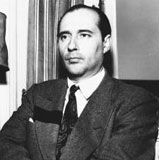 Roberto Rossellini was one of the most famous Italian film directors from the first half of the 20th century. Born in 1906 in Rome, he grew in the ambient of cinema, since his father built the first cinema of the capital. As young he worked as a sound maker for films and had an opportunity to meet some important figures in filmmaking.
He started with Goffredo Alessandrini, and worked during his career with Fellini, Fabrizi and others. Just two months after the liberation of Rome, Rossellini was already working on his famous film Rome, open city-1945, which was a huge success.
Rossellini preferred using non-professional actors. He wrote scripts according to their feelings and histories. He liked using a lot of regional accents and dialects in his films.
He was a real womanizer, who married four times and had seven children. His third wife was the famous international actress Ingrid Bergman. It was one of the most famous love stories from the ambient of cinema. Started as an affair since both of them were already married, but when Ingrid Bergman became pregnant they made their relationship official. One of their children is well-known actress and model Isabella Rossellini. The marriage to Berman ended due to an affair with an Indian screenwriter Sonali Das Gupta who worked with him during the filming in India. That was another love scandal in his life.
Rossellini died in Rome in 1977. He left behind some of the important films of Italian early cinematography: "Roma, città aperta", "Paisà", "L'Amore", "Europa '51", "Viva l'Italia!", etc.
Federico Fellini
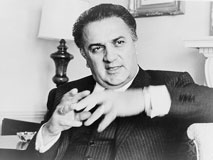 Federico Fellini! That controversial Italian director-both criticizes and praised to the maximum. He was born in Rimini (January 1920) but spent most of his life working in Rome, the center of Italian cinematography.
His early career as a journalist is to blame for his beginnings in the industry of cinema. There he met some great names like Vitaliano Brancati, a novelist, Piero Tellin, a scriptwriter, Bernardino Zapponi, his future screenwriter.
Federico Fellini! That controversial Italian director-both criticizes and praised to the maximum. He was born in Rimini (January 1920) but spent most of his life working in Rome, the center of Italian cinematography.
His early career as a journalist is to blame for his beginnings in the industry of cinema. There he met some great names like Vitaliano Brancati, a novelist, Piero Tellin, a scriptwriter, Bernardino Zapponi, his future screenwriter.
During the Second World War, Fellini was working for the radio, trying to avoid the draft. There he met his wife, Giulietta Masina. They collaborated professionally many times in their future life. Due to a war circumstances his medical records were destroyed in a bombing and he was freed of the draft.
Before he started his career as a director, Fellini wrote dialogues for Aldo Fabrizi's and Rossellini's scripts. He continued working with Rossellini on several of his movies: "Roma, città aperta", "Paisà", "L'amore", "Europa'51".
During his work on the movie La strada, Fellini had his first signs of severe clinical depression. Despite all, he managed to finish his work, and was also reworded with his first Oscar in 1957 as the Best Foreign Film. His second Oscar for the Best Foreign Film came the year after, for his famous film "Notti di Cabiria". In making it he collaborated with Dino De Laurentiis, Giulietta-his wife, Pier Paolo Pasolini, who was hired to translate dialogues into Roman dialect. Giulietta Masina got reworded as the Best Actress at Cannes.
His Film "La Dolce Vita" broke all box office records at the time. Everybody wanted to see the new Fellini's film before the censors banned it. Fellini was inspired by photos of Anita Ekberg walking fully dressed through beautiful Trevi Fountain in Rome. A lot of famous scenes were shot in the studios at Cinecittà.
After his great successes, Fellini faced his strong creative block when he started working on his film "8 ½". Eventually, the inspiration for the film actually came out of that block, and the film narrates it. He gave this particular name to the film because it was his 8th movie. He got a lot of nominations and rewords for it.
It's interesting how much he was criticized at his beginnings, even told he had nothing in common with making movies, but almost all of them became famous and took a lot of awards. Not to mention Lifetime Achievement Awards at the Cannes Film Festival (1974), Venice Film Festival (1985), Oscar (1993). In 1985 he became the first non-American to receive the Film Society of Lincoln Center's annual award for cinematic achievement. He also got the Japan Art Association's Praemium Imperiale (equivalent of the Nobel Prize in the visual arts) in 1990.
Fellini died in Rome at the age of 73. His wife joined him five months later.
For more info you can visit the official site of the Fellini Fondazione.
Sophia Loren
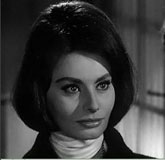 Sophia Loren, a beautiful Italian film actress, still active in her way over seventies, was born in Rome in 1934. She made her way into the world of the famous by enrolling in acting class where she was selected as an extra in the Mervyn LeRoy's "Quo Vadis". Sophia met her husband Carlo Ponti, film director, when she took part in a beauty contest where he was in a jury. From there she started to getting to know the important figures in Hollywood and co-starred with Cary Grant and Frank Sinatra. Alongside with her acting career she also recorded over two dozen songs.
In 1961 Sophia Loren won an Academy Award for Best Actress for "Two Women", becoming the first actor to win an Academy Award for a non-English-speaking performance. Then followed the 1995's Golden Globe Cecil B. DeMille Award. In 1991 she received the Academy Honorary Award for her contributions to world cinema. It's interesting that there's a street in Etobicoke, near Toronto named after her.
Some of her work to remember is:
- Boy on a Dolphin
- The pride and the passion
- 2 nights with Cleopatra
- Heller in pink tights
- Two Women
- The voyage
- Lives of the Saints
Isabella Rossellini
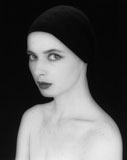 Isabella Rossellini, an Italian actress, filmmaker and model was born in a famous Bergman-Rossellini marriage in 1952 in Rome. She made her debut in a film "A metter of time" where she played with her mother, but people usually remember her from the David Lynch's "Blue Velvet", where she played a role as a nightclub singer. She starred in another Lynch's film "Wild at heart" as Perdita Durango. Rossellini had a brief marriage with Martin Scorsese, and in that period also started her modeling career. She was for 14 years a face of Lancome. Beside her modeling and acting career she is also a board member of the Wildlife Conservation Network and a National Ambassador for the U.S. Fund for UNICEF.
Sergio Leone
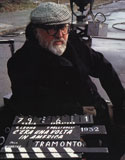 Sergio Leone was an Italian film director, producer and screen writer. He was born in Rome in 1929, in a marriage of known film artists, Vincenzo Leone, a.k.a. Roberto Roberti and silent film actress Bice Waleran. Naturally he showed his interest for filmmaking very early. He started with historical epics, popular at the time. He also worked as an assistant director on some very famous films shot at the Cinecittà Studios in Rome like "Quo Vadis" and "Ben Hur".
Leone is mostly associated with the "Spaghetti Western" genre which started with his well known triology "A Fistful of Dollars", "For a Few Dollars More" and "The Good, the Bad and the Ugly". One after another they were becoming a huge success. The first film of this triology actually established Clint Eastwood as a star, who had been until then an American TV actor. Since then Sergio Leone started collaborating with his classmate, music composer Ennio Morricone.
After these successful films, Leone finally could afford to work with some famous actors like Charles Bronson and Henry Fonda on a film "Once Upon a Time in the West", made for Paramount Pictures.
His last film, and maybe his best is "Once Upon a Time in America", an almost 4 hours long masterpiece featuring Robert De Nero and James Woods.
Sergio Leone died in 1989 of a heart attack.
Ennio Morricone
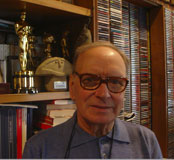 Ennio Morricone, well known Italian composer and conductor was born in Rome in 1928. He was educated at the National academy of Santa Cecilia in the trumpet, composition, choral music and choral direction under Goffredo Petrassi. After he graduated he continued working in classical composition and arrangement, and in the early '50s he begun writing his first background music for radio dramas. His career as film music composer started in 1961 with the film "Il Federale" directed by Luciano Salce, but Morricone became famous together with his classmate Sergio Leone working on his westerns. Ennio Morricone has composed and arranged scores for more than 500 film and TV productions. He collaborated with a lot of famous directors living his recognizable trace in their movies. Some of them are before mentioned Sergio Leone, then Brian De Palma, Giuseppe Tornatore, Oliver Stone, Pedro Almodovar, Roman Polanski, Bernardo Bertolucci, ..etc.
He also conducted the Philharmonic Orchestra and Chorus of La Scala Theatre, the Rome Opera House Orchestra, the Budapest Opera House Orchestra, the Orquesta Nacionales de España (ONE) and the National Brazilian Orchestra.
His work has been greatly awarded with: 1 Grammy Award, 3 Golden Globes and 5 Anthony Asquith Awards for Film Music by BAFTA. Morricone has been nominated for 5 Academy Awards for Best Music. He received the Honorary Academy Award in 2007 for "his magnificent and multifaceted contributions to the art of film music". He was the second composer to receive this award after its introduction in 1928.
In the recording field, Morricone has received 27 Golden Records, 7 Platinum Records, 3 Golden Plates and the “Critica discografica” award for the music of the film “Il Prato”. The soundtrack from the film "The Good, The Bad and The Ugly" has been included in the list of inductees for the Grammy Hall of Fame 2009.
In the 2009 the President of the French Republic, Nicolas Sarkozy, has signed a decree appointing Ennio Morricone to the rank of Knight in the Order of the Legion of Honor.
Massimiliano Fuksas
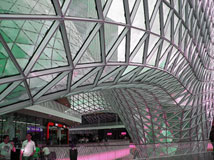 Massimiliano Fuksas is an Italian architect, native of Lituania , born in Rome in 1944. He graduated in Architecture at "La Sapienza" University in 1969, where he opened his first office. In the years to follow he opened offices in Paris, Vienna and Shenzhen (China).
From 1994 to 1997 he was a member of the urban commissions of Berlin and Salzburg.
Fuksas dedicated a lot of his time to the study of urban problems in large metropolitan areas.
From 1998 to 2000 he was Director of the VII Biennial of Architecture in Venice "Less Aesthetics, More Ethics".
Fuksas also keeps a regular architectural column in the weekly magazine "L'Espresso" since 2000.
He was visiting professor at several universities, including the Ecole Spéciale d'Architecture in Paris and the Columbia University in New York.
Fuksas works a lot all over the world and the list of his architecture is very long. Some examples are:
- Armani Fifth Avenue, New York
- MyZeil, Frankfurt
- ZENITH Music Hall, Amiens
- Ferrari Operational Headquarters, Maranello, Modena
- Maison des Arts, Bordeaux
- Armani Ginza Tower, Tokyo
Fuksas lives and works between Rome and Paris.
Some of the recent awards:
- 2002 Honorary Fellowship of the American Institute of Architects
- 2000 Awarded Accademico Nazionale di San Luca, Italy
- 2000 Awarded Commandeur de l'Ordre des Arts et des Lettres de la République Française
- 1998 Awarded Vitruvio a la Trayectoria, in Buenos Aires
- 999 Awarded Grand Prix d'Architecture Française
Eros Ramazzotti
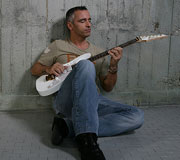 Eros Ramazzotti is famous Italian singer and songwriter from Rome. He is very well known all around the Europe and especially in Spain and Latin America, due to his songs sang in Spanish.
His first steps towards the fame are made in a music contest called Voci Nuove di Castrocaro. He didn't wit it, but had an opportunity to meet the owners of the label DDD who were very interested in his singing and called him to come to Milan, where his career started.
In 1984 he took part in a famous Sanremo Music Festival with his song "Terra Promessa", and won the competition for the category "Newcomers". That was his first brake through and the song was released world wide. Ramazzotti took part in the Sanremo Festival another two times in a row and his third time was the lucky one when he won the overall competition with his memorable song "Adesso Tu".
Ramazzotti started traveling all around the world, from North to South America, and throughout the whole Europe making successes one after another. He played and made singles with many world wide famous people like Cher, Tina Turner, Patsy Kensit, Luciano Pavarotti, Ricky Martin.
In the summer of 1995 Ramazzotti participated in the European Summer festival beside Rod Stewart, Elton John and Joe Cocker.
Passionate autobiographical ballads, easy going melody, soft-rock influence are characteristic for this singer.
Ramazzotti also gained reputation of a recognized producer when he produced the album "Come fa bene l'amore" for Gianni Morandi in 2000.
Beside a couple of live albums and compilations, Eros published 10 studio albums:
- Cuori agitati (Troubled Hearts) (1985)
- Nuovi eroi (New Heroes) (1986)
- In certi momenti (Sometimes) (1987)
- In ogni senso (In Every Sense) (1990)
- Tutte storie (All Stories) (1993)
- Dove c'è musica (Where There is Music) (1996)
- Stilelibero (Freestyle) (2000)
- 9 (2003)
- Calma apparente (Apparent Calm) (2005)
- Ali e radici (Wings and roots) (2009)
Giancarlo Fisichella
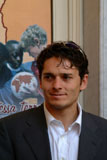 Giancarlo Fisichella is a famous Italian racing driver. He was born in Rome in 1973. Fisichella has driven in Formuna One for Minardi, Jordan, Benetton, Sauber, Renault, Force India and is currently driving for Ferrari replacing injured Felipe Massa. It is planed for him to be Ferrari's reserve driver also for 2010.
As it usually begins, Fisichella started with kart racing and had some success. His first Formula One race was 1996 Australian Grand Prix.
Until 2003 Fisichella had some success but his first win was at the chaotic 2003 Brazilian Grand Prix. This race was abandoned for the safety reasons. Then followed another two wins in his career: the 2005 Australia Grand Prix and the 2006 Malaysian Grand Prix.
Outside of driving Giancarlo Fisichella has backed his own GP2 team, FMS International.
Max Biaggi
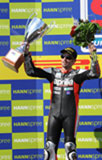 Massimiliano Max Biaggi is a Roman motorcycle racer born in 1971.
Max began his racing career at the age of 18 in the 125cc class for Aprilia. Very soon he won the Italian Sport Production Championship. After this sudden success he passed to the 250cc class.
In 1991 Max became the European champion on an Aprilia RS250. In the years to follow, Biaggi won four World Championships: '94 (Aprilia), '95 (Aprilia), '96 (Aprilia) and '97 (Honda). Following his rising career, Max moved up to the 500cc class and made a rapid success once again. He arrived 2nd in the Japanese Grand Prix.
In 1999 Max tested the FErrari F399 F1 at the Fiorano Circuit in Modena gaining a remarcable risult.
In 2002 Biaggi passed to MotoGP class and rode four-stroke for the first time. He started well, it was expected that Biaggi would be one of the main candidates for the title in 2004, but a crash in Estoril saw his season begin to fade. Biaggi finished the championship in third place.
Max then lost his ride for the 2006 season. He attempted to reach an agreement to race the Superbike World Championship for Corona Alstare Suzuki in 2006 but the team could not commit to equal equipment with their existing riders.
2007. New hope. Biaggi began the season by winning the first race at the Losail International Circuit in Qatar and finishing second in race two. In doing so Max Biaggi became one of only five men to win their first Superbike World Championship race, and the only rider ever to win his first Superbike race and his first race in 500cc Grand Prix.
In 2008 he tried his luck with Ducati 1098RS.
The year 2009 marked his return to the roots, at least for now, joining the Aprilia team once again.
Max Biaggi currently lives in Monaco and is still very active racer.
Francesco Totti
 Francesco Totti, born in Rome, lives in Rome and plays for Roma all of his life. A.S.Roma's captain since 1997, Francesco Totti is considered the club's symbol. His position is a striker or an attacking midfielder.
Totti is the number-one goalscorer and is considered to be Roma's greatest player of all time. He has won a record five times Italian Footballer of the Year and two times Serie A Footballer of the year.
This World-Cup winning footballer, club's famous n°10, besides football is an ambassador for UNICEF since 2003 and the FIFA/SOS Children's Villages. Totti also runs a football school, "Number Ten," and owns a motorcycle racing team called "Totti Top Sport."


 Facebook
 Twitter
 Flickr
 Our Blog